
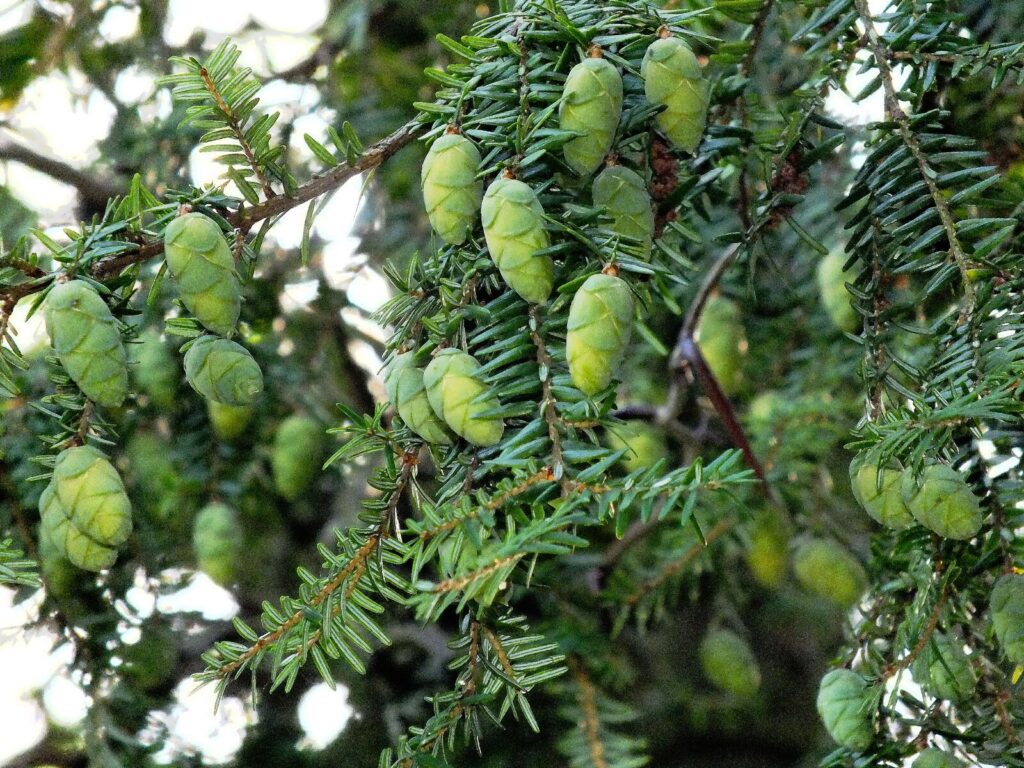
Propagating the Eastern Hemlock (Tsuga canadensis): A Guide for Gardeners
Introduction:
The Eastern Hemlock ( Tsuga canadensis) is a graceful, shade-tolerant evergreen conifer prized for its feathery foliage, pyramidal form, and adaptability to a range of conditions. Its popularity stems from its use as a specimen tree, in hedges, and as a component of woodland gardens. While relatively easy to establish once planted, propagating Eastern Hemlock can present some challenges due to its relatively slow growth and specific germination requirements. This article explores various propagation methods, weighing their viability and providing practical guidance.
Seed Germination:
Seed germination is a viable, albeit challenging, method for propagating Tsuga canadensis. The primary challenge lies in breaking seed dormancy. Eastern Hemlock seeds require a period of stratification – a cold, moist treatment – to mimic the natural winter conditions that trigger germination.
Challenges: Low germination rates are common even with proper stratification. Seed quality significantly impacts success; collecting seed from healthy, mature trees improves chances. Fungus and other pathogens can also cause issues during germination.
Practical Tips: Collect seeds in the fall after they mature and have turned brown. Stratify seeds for 3-4 months at temperatures near 34-40°F (1-4°C) in a moist medium like damp peat moss or vermiculite. Sow stratified seeds in a well-draining seed-starting mix, covering them lightly with the mix. Maintain consistently moist conditions but avoid overwatering. Maintain temperatures between 60-70°F (15-21°C).
Rewards: Seed propagation offers the greatest genetic diversity, resulting in a wider range of plant characteristics. It also allows for large-scale propagation, though germination rates may necessitate sowing many seeds to achieve a desirable number of seedlings.
Cuttings:
Propagation via cuttings is a more reliable method than seed propagation, offering a higher success rate and faster establishment.
Challenges: Root development can be slow, requiring patience and careful attention to humidity and temperature. The use of rooting hormones is often beneficial but not guaranteed to improve success. Softwood cuttings are often preferred, taken during the early summer months.
Practical Tips: Take 4-6 inch long cuttings from new growth and remove lower leaves to minimize rot. Dip the basal ends in a rooting hormone solution and plant them in a well-draining potting mix. High humidity is crucial, often achieved through misting or using a propagation dome. Keep cuttings in a shaded location with consistent moisture and warmth.
Rewards: Cuttings offer a faster way to obtain plants with traits true to the parent plant. This is particularly valuable when propagating desirable cultivars.
Division:
Division is not a practical method for propagating Tsuga canadensis. Eastern Hemlocks have a taproot system that does not lend itself readily to division. Attempting division is likely to cause significant damage and reduce survival rates.
Tissue Culture:
Tissue culture is a viable, albeit technically demanding, option for large-scale propagation and the production of disease-free plants.
Challenges: It requires specialized equipment, a sterile environment, and a deep understanding of plant tissue culture techniques. This method is generally reserved for commercial nurseries and research institutions.
Practical Tips: This process requires expertise in plant tissue culture protocols specific to Tsuga canadensis. Appropriate media and growth regulators must be used to induce callus formation, shoot proliferation and rooting.
Rewards: Tissue culture offers the potential for rapid propagation of genetically identical plants, eliminating the variability found in seeds and often resulting in superior establishment.
Conclusion:
Propagating Eastern Hemlock presents diverse challenges depending on the chosen method. While seed propagation offers genetic diversity but low success rates, cuttings offer higher success rates but limit genetic diversity. Division is not a viable option. Tissue culture provides a solution for mass production but requires specialized knowledge and equipment. The unique satisfaction of cultivating an Eastern Hemlock from seed, cutting, or even tissue culture stems from the understanding that each plant represents a considerable investment of time, effort, and attention to detail, making success all the more enriching. For aspiring propagators, patience, meticulous attention to detail, and persistence are key ingredients to success. Experimentation with different methods, coupled with careful observation and learning from each attempt, will undoubtedly lead to successful cultivation and add a profound sense of accomplishment to your gardening journey.