
Anthuriums (Anthurium spp.) are a diverse genus of flowering plants native to tropical rainforests in the Americas. They are prized for their long-lasting, heart-shaped flowers (technically modified leaves called spathes) that come in a dazzling array of colors, from classic red to fiery orange, soft pink, and even deep purple. Depending on the variety, anthuriums can also boast stunning foliage with unique patterns and textures.
Traditional Propagation Methods:
Traditionally, anthuriums have been propagated through methods like division or stem cuttings. However, these methods have limitations. Division can be stressful for the mother plant and may not produce many new plants. Stem cuttings can be slow to establish and have a lower success rate.
The Science of Tissue Culture:
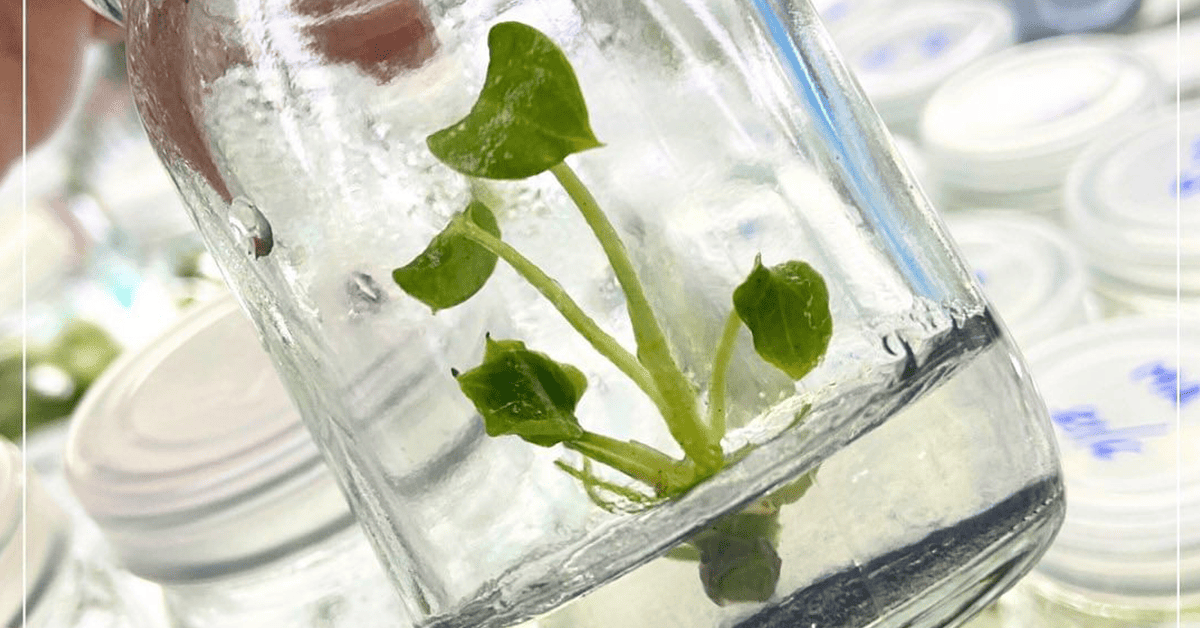
Tissue culture is a sophisticated plant propagation technique that utilizes the power of plant cells to generate new, identical plants. Here’s a simplified overview of the process for anthuriums:
- Explant Selection: A tiny piece of tissue, often from the growing tip or young leaf, is carefully selected from a healthy mother plant.
- Media Preparation: A nutrient-rich, sterile culture medium is prepared to provide the explant with all the necessary nutrients and hormones for growth.
- Aseptic Conditions: The entire process takes place in a sterile environment to prevent contamination by bacteria or fungi.
- Multiplication: Under controlled conditions, the single explant cells begin to divide and multiply rapidly, forming a mass of new plantlets.
- Acclimatization: Once the plantlets have developed a sufficient root system and shoots, they are gradually introduced to non-sterile conditions to prepare them for life outside the culture medium.
The Advantages of Tissue Culture:
- Rapid Propagation: Tissue culture allows for the mass production of anthuriums in a much shorter time frame compared to traditional methods.
- Disease-Free Plants: The sterile environment minimizes the risk of disease transmission, resulting in healthy, virus-free plantlets.
- Genetic Uniformity: Since the plantlets are genetically identical to the mother plant, this method ensures consistent quality and predictable characteristics in the offspring.
- Compactness: Micropropagation through tissue culture allows nurseries to maintain a large stock of plantlets in a relatively small space.
**While tissue culture is a highly specialized technique typically performed in a laboratory setting, understanding this process gives you a deeper appreciation for the abundance and quality of anthuriums available to plant lovers everywhere. **
For the home grower, propagating anthuriums through tissue culture isn’t recommended due to the specialized equipment and sterile environment required. However, you can explore propagating anthuriums at home using simpler methods like division or seed propagation (for the very patient!).