New basal media for half-anther culture of Anthurium andreanum

New basal media for half-anther culture of Anthurium andreanum

Abstract A successful protocol for high frequency callus induction and plant regeneration from Anthurium andrea- num Linden ex Andre´ cv. Tropical half-anthers is descri- bed. Different variables using Winarto and Teixeira and Murashige and Skoog basal media supplemented with several plant growth regulators [2,4-dichlorophenoxy ace- tic acid (0.1–1.0 mg/l), a-naphthalene acetic acid (0.01–0.2 mg/l), thidiazuron (0.5–2.0 mg/l), 6-benzylami- nopurine (0.5–1.0 mg/l), and kinetin (0.5–1.0 mg/l)] were tested for their ability to induce high frequency callusing in half-anthers, indirect regeneration and rooting of shoots. Basal medium, as well as the combination and concentra- tion of hormones applied, had a significant effect on callus formation, shoot regeneration and adventitious root for- mation. Winarto and Teixeira-1, an original basal medium containing 0.01 mg/l a-naphthalene acetic acid, 0.5 mg/l thidiazuron and 1.0 mg/l 6-benzylaminopurine was suit- able for callus formation while an improved basal medium i.e., New Winarto–Teixeira-3 supplemented with 0.25 mg/l 2,4-dichlorophenoxy acetic acid, 0.02 mg/l a-naphthalene acetic acid, 1.5 mg/l thidiazuron and 0.75 mg/l 6-benzyl- aminopurine enhanced callus formation. High shoot regeneration and multiplication was also possible on New Winarto–Teixeira-3. Shoots formed a strong adventitious root system on New Winarto–Teixeira-3 containing. 0.2 mg/l a-naphthalene acetic acid and 1.0 mg/l kinetin. Plantlets that varied in size and performance were suc- cessfully acclimatized and adapted to ex vitro conditions. Cytological analysis of 180 acclimatized-plantlets ex vitro revealed that 34 were haploid (n = 14–18), 15 aneuploid (n = 20–26), 126 diploid (n = 28–34) and 5 triploid (n = 45–57). The potential use of this protocol for devel- oping half-anther culture of other Anthurium species or cultivars is discussed.

Micropropagation of Anthurium – MATSUMOTO 1997

Micropropagation of Anthurium - MATSUMOTO 1997

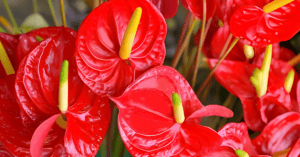
Within the family Araceae, Anthurium is the largest, most morphologically diverse and complex genus, consisting of approximately 1000 species. Native to Central and South America, members of Anthurium are found at elevations ranging from sea level to 3000 m, most commonly in cloud forests at 1500m (Croat 1986). Plants of this herbaceaous perennial monocot are terrestrial or epiphytic. Typical of the aroids is the spadix, consisting of a multitude of unobtrusive true flowers supported by a fleshy axil. The protogynous nature of the bisexual flowers in Anthurium favors cross-pollination. The commercial flower is a combination of the spadix and a colorful modified leaf, termed spathe. Attractive foliage of some species makes anthuriums also suitable for leaf harvest and cultivation as a potted plant.

Anthurium Adventures: Propagating from Stem Cuttings

Anthurium Adventures - Propagating from Stem Cuttings

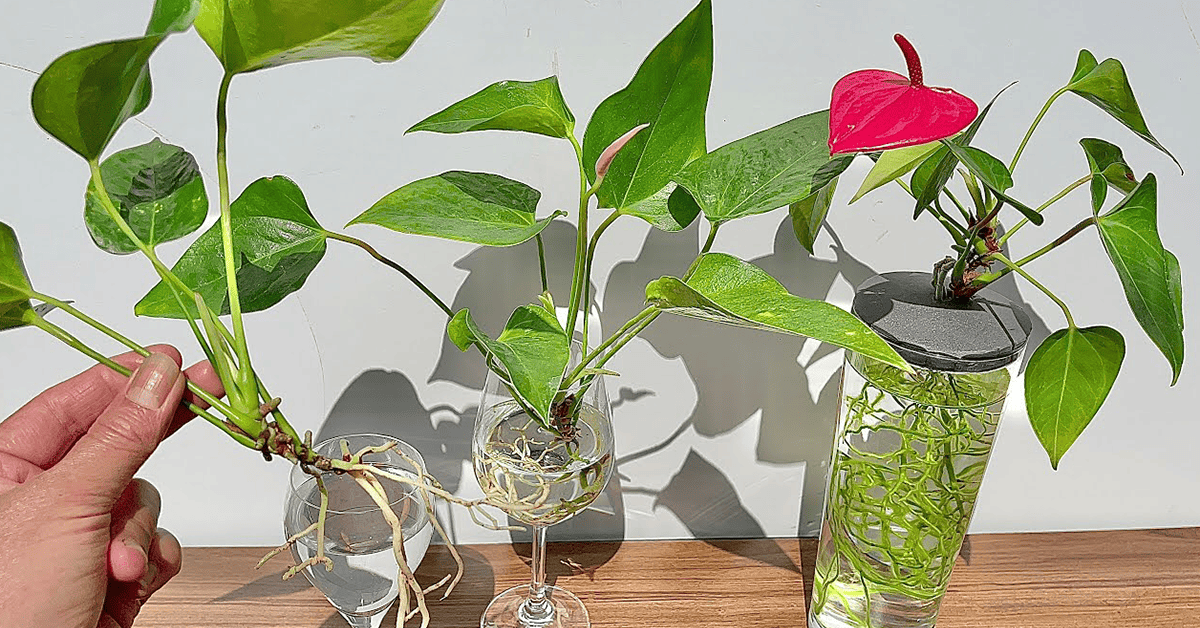
The captivating anthurium, with its vibrant blooms and elegant foliage, is a popular indoor plant. But what if you could multiply your beloved anthurium and create more of these tropical beauties? This article explores propagating anthuriums from stem cuttings, guiding you through both water and soil propagation methods. With a little patience and these simple steps, you’ll be well on your way to an anthurium haven!

Unveiling the Magic: Propagating Anthuriums Through Tissue Culture

Unveiling the Magic - Propagating Anthuriums Through Tissue Culture

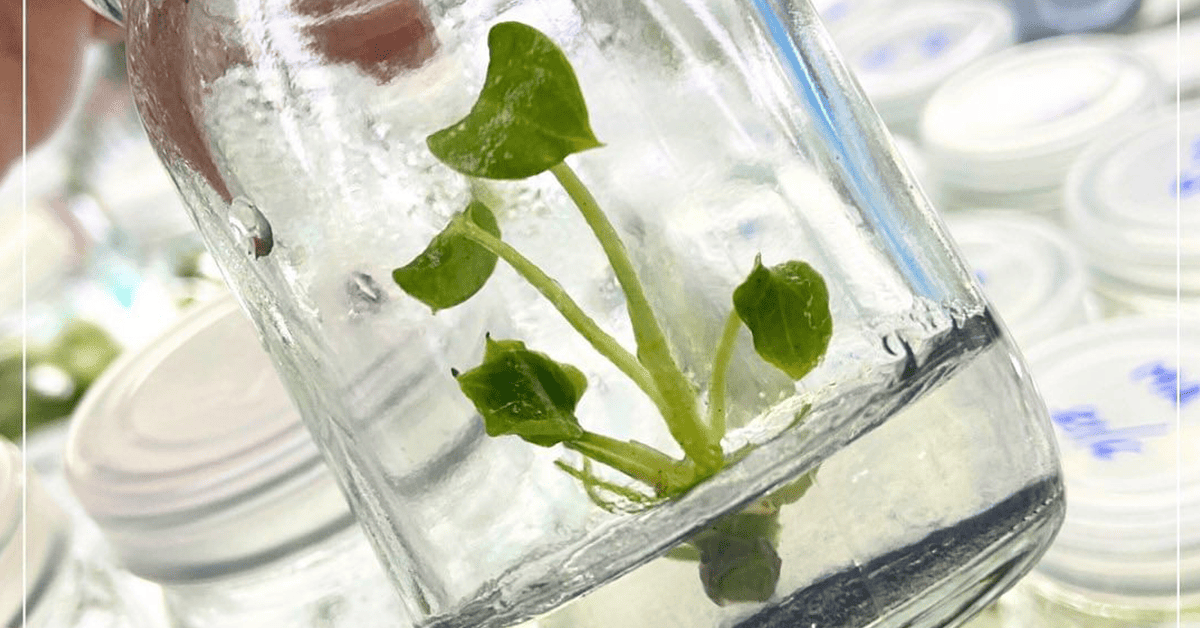
Anthuriums, with their captivating flowers and glossy leaves, are stars of the indoor plant world. But have you ever wondered how nurseries cultivate such an abundance of these tropical beauties? The answer lies in a specialized technique called tissue culture. This article explores the world of tissue culture propagation for anthuriums, guiding you through the process and its advantages.