
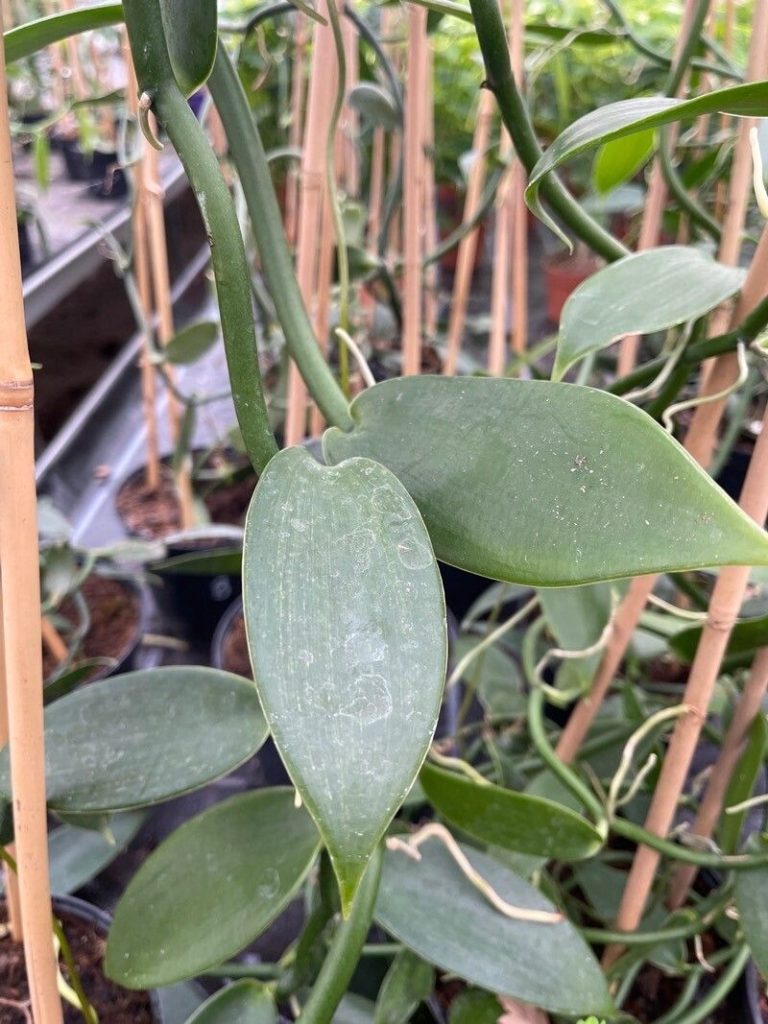
Propagating Vanilla imperialis: A Gardener’s Guide to a Rare Orchid
Vanilla imperialis, also known as the Imperial Vanilla or sometimes simply as the Giant Vanilla, is a breathtaking climbing orchid native to the rainforests of Central America. Its large, fragrant flowers and potential for producing vanilla beans, though less commercially viable than Vanilla planifolia, make it a highly desirable plant among orchid enthusiasts and gardeners seeking a unique challenge. However, propagating V. imperialis presents significant hurdles, unlike its more commonly cultivated relative. Its popularity among gardeners stems from its unusual beauty and the satisfaction derived from cultivating such a challenging plant.
Seed Germination:
Currently, there are no known reliable methods for seed germination propagation of Vanilla imperialis. The seeds of Vanilla species are notoriously difficult to germinate due to their small size, delicate nature, and specific mycorrhizal fungal requirements for successful establishment. While research continues into orchid seed germination techniques, this method is not currently recommended for V. imperialis.
Cuttings:
Cuttings represent the most practical and commonly used method for propagating Vanilla imperialis. However, it is not without its challenges.
Challenges: Success relies on taking cuttings from healthy, mature stems. The cuttings must be sufficiently long (at least 15-20cm) to contain several nodes, and proper sanitation to prevent fungal infection is crucial. Furthermore, a humid, warm environment with high humidity (ideally above 80%) and consistently high temperatures (25-30°C) is essential for rooting.
Practical Tips: Use a sharp, sterile blade to take cuttings, treating the cut ends with a rooting hormone to stimulate root development. Planting in a well-draining, moisture-retentive medium like a mix of sphagnum moss and perlite is advantageous. Maintaining consistent humidity can be achieved through propagation trays covered with plastic sheeting or regular misting. Patience is key; rooting can take several weeks or even months.
Rewards: Cuttings offer a relatively reliable method for creating genetically identical copies of a parent plant with desirable traits. It is a more manageable approach than other methods for propagation and yields plants quicker than tissue culture; however, it does not introduce genetic diversity.
Division:
Division of established Vanilla imperialis plants is a possible method, but only applicable once the plant has become quite mature and has developed substantial root systems with multiple growing points.
Challenges: Carefully separating the rhizome into distinct divisions, each with sufficient roots and stems, is crucial to avoid damaging the plant and reducing the chance of individual plant parts surviving independently. This operation necessitates careful handling and can be quite damaging.
Practical Tips: Division should ideally be undertaken during the warmer months, after the main growing season but before new growth appears. Use a sharp, sterile tool to divide the rhizome. Replant each section into pots filled with the same well-draining mix used for cuttings and maintain high humidity.
Rewards: Division is a relatively quick method of expansion for an already established plant, generating multiple cloned plants. However, it can injure the mother plant and the number of plants available for division is limited.
Tissue Culture:
Tissue culture propagation of Vanilla imperialis offers the potential for large-scale production and disease-free plantlets.
Challenges: This method requires specialized laboratory equipment, sterile conditions, and expertise in plant tissue culture techniques. It is a complex and expensive process and not feasible for most home gardeners.
Practical Tips: Finding a qualified laboratory with experience in orchid tissue culture is crucial. The process may involve sterilizing plant sections, placing them into a nutrient-rich medium, and then inducing shoot proliferation and ultimately rooting.
Rewards: Tissue culture allows for the rapid multiplication of plants, preserving genetic uniformity, and producing pathogen-free plantlets. This method is particularly useful for conservation and commercial propagation.
Conclusion:
Propagating Vanilla imperialis presents considerable difficulties. While cuttings offer the most practical approach for home gardeners, patience and meticulous care are paramount. Division is an option for established plants, but carries the risk of injury. Seed germination and tissue culture are currently impractical for most individuals. However, the unique beauty and challenging nature of this rare orchid species make the rewarding process of successful cultivation a profoundly satisfying experience. For aspiring propagators, remember that consistent humidity, warmth, and careful attention to detail are key elements to success. The eventual reward of a thriving Vanilla imperialis plant, with its impressive flowers and potential for vanilla bean production, makes the effort worthwhile.