
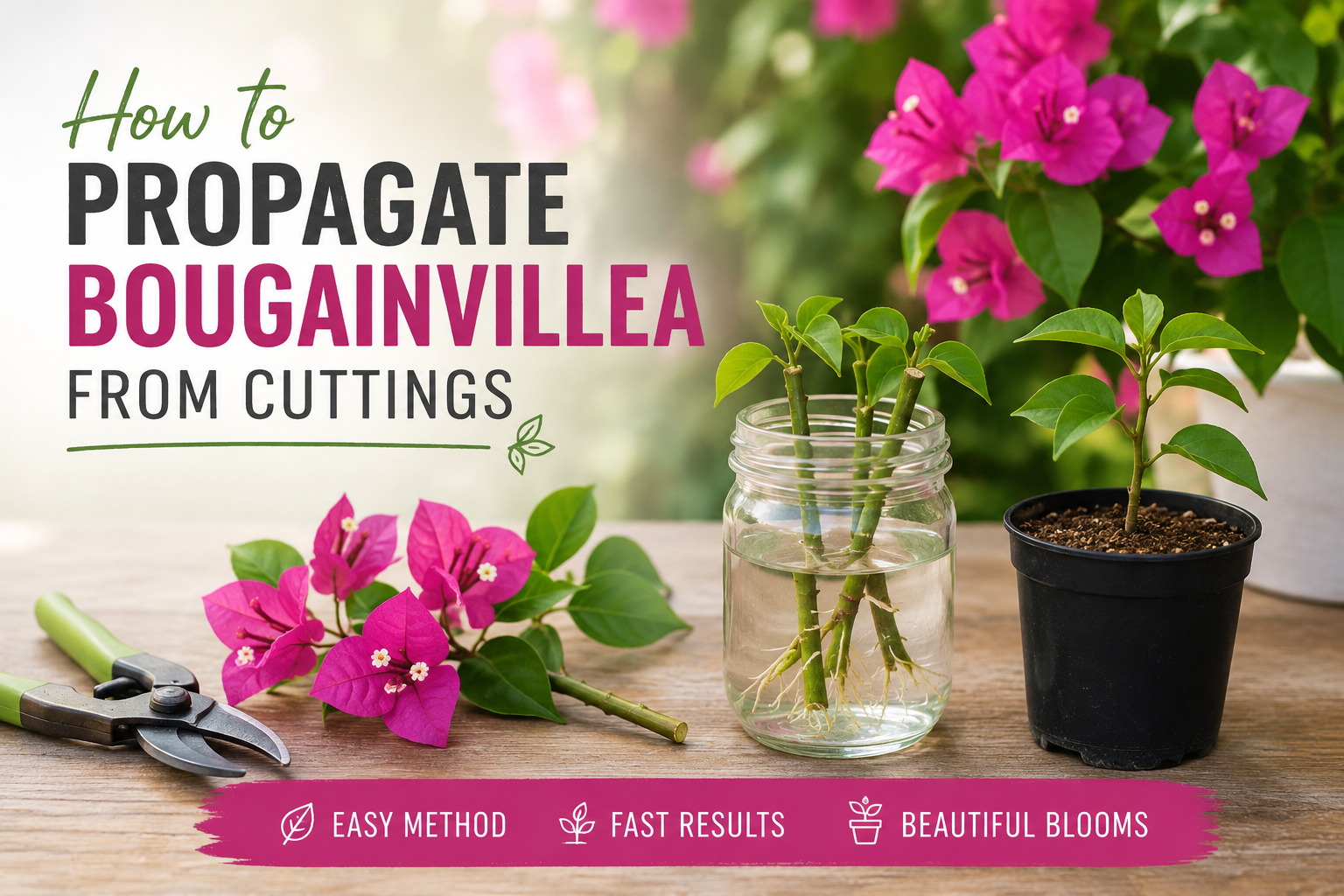
Few plants pay you back like bougainvillea. One well-rooted cutting can become a wall of paper-thin magenta, orange, or white flowers within a couple of seasons — and it costs you nothing but a snip and a little patience. I take mine in summer, when the plant is growing hard and cuttings root fastest, and I’ll walk you through the method that’s given me the most reliable results, including one small trick that noticeably lifts your strike rate.
When to take bougainvillea cuttings
The sweet spot is late spring through mid-summer, when the plant is growing fast and cuttings root most readily. Semi-hardwood cuttings — this year’s growth that has started to firm up but still bends — are the most forgiving, and July is right in the middle of that window. In cooler climates you can also take hardwood cuttings in winter from dormant, woodier stems; interestingly, those firmer cuttings often root just as well or better. Warmth is the real driver here, so whichever you take, keep them warm.
What you’ll need
- A healthy bougainvillea to take cuttings from
- Clean, sharp secateurs or a knife
- Small pots with drainage, and a free-draining mix (or a jar of water)
- Rooting hormone (optional but genuinely helpful here)
- A warm, bright spot out of harsh direct sun
Taking the cutting (and the cambium trick)
Choose a healthy stem and cut a length of about 5 to 6 inches (12–15 cm). Trim the bottom just below a leaf node and the top just above one — nodes are where roots and new shoots come from. Strip the leaves off the lower half so you have a clean length of stem to bury.
Here’s the trick that makes a real difference with bougainvillea: gently scrape a thin sliver of the outer bark off the lowest inch or two of the stem, just enough to expose the greenish layer underneath (the cambium). That’s the tissue that produces roots, and wounding it lightly encourages far more of them to form. Then dip the base in rooting hormone — bougainvillea responds well to it, and it noticeably speeds and improves rooting, though softer cuttings can manage without.
Step by step
- Fill a pot with a free-draining mix. A gritty blend of potting mix with plenty of perlite or coarse sand works well — bougainvillea hates sitting wet.
- Insert the cutting. Make a hole with a pencil, slide the prepared stem in a couple of inches deep, and firm the mix around it so it stands on its own.
- Create gentle humidity. Cover loosely with a clear bag or dome so it doesn’t touch the leaves, and open it for a few minutes each day so air can move and mold can’t take hold.
- Keep it warm and bright. Bougainvillea roots fastest in real warmth (around 80–90°F / 26–32°C). Give it bright light but keep it out of scorching direct sun, which dries cuttings out before they can root.
- Water sparingly. Keep the mix barely moist — never soggy. This is the single most important habit for success.
The thing that kills most bougainvillea cuttings
Rot, and it comes from overwatering. A cutting has no roots to drink with, so a wet pot just invites fungal problems at the base. Keep the medium on the dry side of moist, give the cutting some airflow, and resist the urge to check and fuss. If the base turns brown and mushy, that cutting is done — but take several and a few soggy failures won’t matter.
Water or soil?
Both work. Rooting in a jar of water is satisfying because you can watch the roots appear, and it’s a fine option for beginners. But most experienced growers root bougainvillea straight into a gritty mix — there’s less risk of rot, the roots are sturdier, and you skip the tricky move from water to soil. If you do use water, change it every few days and pot up as soon as you see a good cluster of roots.
How long it takes, and aftercare
In steady warmth, expect roots in about 6 to 8 weeks; in cooler conditions it can stretch to 12. A little resistance when you gently tug, or fresh new growth at the tip, tells you it has taken. Once rooted, pot it on and gradually acclimatize it to brighter light. Hold off on feeding for the first several weeks, then use a diluted balanced fertilizer. Bougainvillea is frost-tender, so in cold climates grow your new plant in a pot you can bring indoors over winter.
Frequently asked questions
What is the best time to take bougainvillea cuttings?
Late spring through mid-summer, when the plant is in active growth, is ideal for semi-hardwood cuttings. In cooler climates you can also take hardwood cuttings from dormant stems in winter.
How long do bougainvillea cuttings take to root?
Usually 6 to 8 weeks in warm conditions (80–90°F / 26–32°C), and up to 12 weeks when it’s cooler. Warmth is the biggest factor.
Can you root bougainvillea in water?
Yes. Water rooting works and lets you watch the roots form, but rooting in a gritty mix is usually more reliable and gives sturdier roots. If you root in water, pot up as soon as roots appear.
Do bougainvillea cuttings need rooting hormone?
It’s not essential, but bougainvillea responds well to it — rooting hormone speeds and improves your success rate, especially with firmer semi-hardwood and hardwood cuttings.
Why do my bougainvillea cuttings keep rotting?
Almost always too much moisture. Use a free-draining mix, keep it barely moist, give the cuttings airflow, and keep them warm but out of harsh direct sun.
Related guides
- How to Propagate Lavender From Cuttings — another sun-lover that roots from cuttings.
- Multiplying Roses From Cuttings — take one shrub and make many.
- Boxwood Cuttings: The Easiest Way to Grow Your Own — more semi-hardwood cutting practice.
— Nora Ellison