
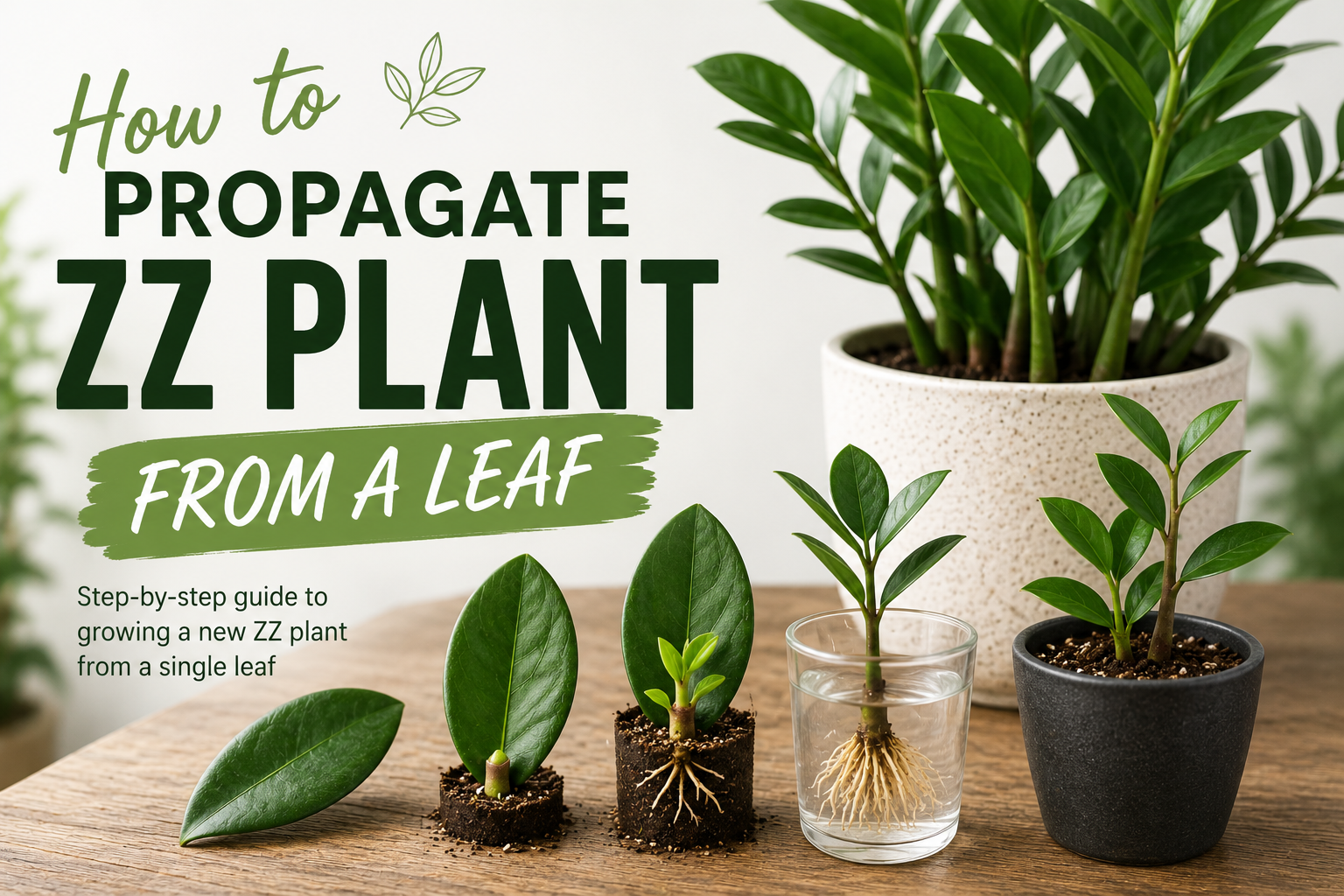
The ZZ plant on my kitchen counter has been with me for years, and it’s one of the few houseplants I’ve genuinely never managed to kill. So when a friend admired it this summer and asked where she could get one, I didn’t reach for my wallet — I reached for a leaf. Propagating a ZZ plant (Zamioculcas zamiifolia) from a single leaf is one of the slowest things I do on my windowsill, but it’s also oddly satisfying, and midsummer, while the plant is in active growth, is a fine time to start one.
When to take a leaf
ZZ plants root best during their active growing season, roughly spring through early summer, but warmth is the real driver here. The little rhizomes that eventually form move fastest when the medium stays around 75 to 80 degrees, so a warm, bright room matters more than the exact date on the calendar. You can start a leaf in fall or winter if you like, but be prepared for it to sit and sulk until the days lengthen again.
What you’ll need
- A healthy ZZ plant to borrow a leaf or two from
- A clean, sharp knife or scissors — wipe the blade with rubbing alcohol first
- A small pot with drainage holes
- A gritty, fast-draining mix: regular potting soil cut with plenty of perlite or vermiculite, or a half-and-half blend of peat and perlite
- Rooting hormone (optional — ZZ doesn’t really need it)
- A warm spot with bright, indirect light
Step by step
- Choose a plump, healthy leaflet. The biggest, firmest leaves root far more reliably than small or yellowing ones. If you can take a whole leaflet with a tiny sliver of stem attached, do — it roots and grows noticeably quicker than a bare leaf.
- Make one clean cut with your disinfected blade. Ragged tears are an open door for rot.
- Let the cut end callus. Set the leaf aside somewhere dry and shaded for a few hours — some folks wait a full day — until the cut surface dries over. This little pause matters more than it sounds.
- Pot it up. Fill your pot with the gritty mix, moisten it lightly, and push the callused end about half an inch to an inch into the medium, cut-end down.
- Set it somewhere warm and bright. Bright, indirect light is ideal — never direct sun through glass, which will scorch a lone leaf in an afternoon.
- Water sparingly, then mostly leave it alone. Keep the mix barely damp and let the top dry between drinks. From here, the job is patience.
The one thing that will ruin it: rot
If a ZZ leaf propagation fails, the culprit is almost always rot, and rot almost always traces back to too much water. A ZZ plant stores water in its rhizomes and stems, so a leaf sitting in soggy soil has no way to dry out and simply turns to mush. Give it a pot that drains, let the surface dry between waterings, and resist the urge to keep checking by poking around — disturbing the forming rhizome only sets it back. With a ZZ, benign neglect really is the winning strategy.
Water or soil?
You’ll see people rooting ZZ leaves in a jar of water, and it can work — but it’s the riskier road. A leaf left in water often forms a rhizome that molds and drops away before it ever establishes. I’ve had much better luck starting straight in a gritty soil mix, which lets the new rhizome develop in the dark, moist-but-not-wet conditions it actually wants. If you do want to try water, change it weekly and move the cutting into soil the moment you spot a small rhizome bump forming.
How long it takes (and aftercare)
Here’s the part nobody loves: it’s slow. A ZZ leaf forms a small, potato-like rhizome underground first, and only later pushes up a new shoot. In a warm spot you might feel a firm rhizome bump within a month or so, but a visible new stem often takes nine months to well over a year. Once you do see growth, treat it like any young ZZ: bright indirect light, water only when the top inch of soil is dry, and a diluted feed now and then during the growing season. If waiting a year isn’t your style, dividing a mature ZZ — two years or older — at the rhizome gives you a full plant instantly. But leaf propagation is the free, low-effort way to make several new plants from one you already love, and there’s something to be said for that.
Frequently asked questions
Can you propagate a ZZ plant from a single leaf?
Yes. A single healthy leaflet will eventually form its own rhizome and grow into a new plant. It’s slower than division or stem cuttings, but it’s the easiest way to turn one plant into several.
How long does it take a ZZ plant leaf to root?
A rhizome can begin forming in about a month in warm conditions, but a visible new shoot usually takes nine months to over a year. Warmth and patience are the whole game.
Is it better to propagate a ZZ plant in water or soil?
Soil. Water rooting works occasionally, but it tends to rot the forming rhizome before it establishes. A gritty, well-draining soil mix is the more dependable choice.
Do ZZ plant cuttings need rooting hormone?
No. ZZ leaves root fine without it. A dab won’t hurt, but they’re slow because of how the plant grows, not because they’re short on hormone.
Why is my ZZ plant leaf cutting turning yellow or mushy?
Almost always overwatering. Ease off the water, make sure the pot drains freely, and double-check that the cut end had time to callus before you planted it.
Related guides
- How to Propagate African Violets from a Leaf
- Pothos Propagation: A Beginner’s Guide
- Propagate Your Christmas Cactus from Cuttings
— Nora Ellison