Adventitious Bud Development and Regeneration in Tillandsia Eizii

Adventitious Bud Development and Regeneration in Tillandsia Eizii

The bromeliad Tillandsia eizii is a striking species with large, colorful, and persistent inflorescences that can reach 1 m in length. The value of this plant as an ornamental and its importance in cultural and religious activities has led to its over-collection in the wild. Clonal propagation via tissue culture may be a means to repopulate native stands while meeting the demands for this species as an ornamental and ceremonial plant. Adventitious bud proliferation was induced from axenically germinated seedling material. Parameters evaluated were the age of explant material at the time of transfer onto bud-induction medium, the concentration of plant growth regulators, and the period of exposure to induction medium. Light and scanning electron microscopy (SEM) established the origin and development of buds. Twelve-week-old seedling explants rapidly initiated adventitious buds after a 30-d induction period on shoot-initiation medium. Adventitious buds were induced in 40% of the explants placed on media with 2 mg l21 6-benzylaminopurine (BA) (8.88 mM) plus 0.1 mg l21
a-naphthaleneacetic acid (NAA) (0.54 mM) with some cultures becoming highly prolific after repeated subculture. Shoots elongated in proliferating cultures, and plants were successfully acclimatized and planted into the greenhouse. The results indicate that tissue culture may be used as a means to propagate this epiphytic bromeliad species, which is being seriously affected by deforestation and habitat destruction. In addition, adventitious bud proliferation can provide a means to propagate superior genotypes.

Tillandsia Stricta: Beyond Seeds – Exploring Propagation Through Offsets

Tillandsia Stricta: Beyond Seeds - Exploring Propagation Through Offsets

Propagating Tillandsia stricta, the popular air plant, isn’t just about aesthetics! It allows you to cultivate more of these unique, low-maintenance plants. While some sources mention stem cuttings, the preferred method is through pups, or offsets. This article explores why pups are the way to go for Tillandsia stricta propagation, guiding you through the separation process and aftercare for your new pup. With a little patience and these steps, you’ll be a pro at multiplying your Tillandsia stricta in no time!

From Branch to Bloom: Propagating Frangipani with Cuttings

From Branch to Bloom: Propagating Frangipani with Cuttings

The frangipani (Plumeria spp.), also known as plumeria, is a beloved flowering tree prized for its intoxicating fragrance and dazzling blooms. But did you know you can propagate your existing frangipani and cultivate more of these tropical beauties? This article explores propagating frangipani from stem cuttings, guiding you through both water and soil propagation methods. With a bit of effort and these simple steps, you’ll be well on your way to a flourishing frangipani haven!

New basal media for half-anther culture of Anthurium andreanum

New basal media for half-anther culture of Anthurium andreanum

Abstract A successful protocol for high frequency callus induction and plant regeneration from Anthurium andrea- num Linden ex Andre´ cv. Tropical half-anthers is descri- bed. Different variables using Winarto and Teixeira and Murashige and Skoog basal media supplemented with several plant growth regulators [2,4-dichlorophenoxy ace- tic acid (0.1–1.0 mg/l), a-naphthalene acetic acid (0.01–0.2 mg/l), thidiazuron (0.5–2.0 mg/l), 6-benzylami- nopurine (0.5–1.0 mg/l), and kinetin (0.5–1.0 mg/l)] were tested for their ability to induce high frequency callusing in half-anthers, indirect regeneration and rooting of shoots. Basal medium, as well as the combination and concentra- tion of hormones applied, had a significant effect on callus formation, shoot regeneration and adventitious root for- mation. Winarto and Teixeira-1, an original basal medium containing 0.01 mg/l a-naphthalene acetic acid, 0.5 mg/l thidiazuron and 1.0 mg/l 6-benzylaminopurine was suit- able for callus formation while an improved basal medium i.e., New Winarto–Teixeira-3 supplemented with 0.25 mg/l 2,4-dichlorophenoxy acetic acid, 0.02 mg/l a-naphthalene acetic acid, 1.5 mg/l thidiazuron and 0.75 mg/l 6-benzyl- aminopurine enhanced callus formation. High shoot regeneration and multiplication was also possible on New Winarto–Teixeira-3. Shoots formed a strong adventitious root system on New Winarto–Teixeira-3 containing. 0.2 mg/l a-naphthalene acetic acid and 1.0 mg/l kinetin. Plantlets that varied in size and performance were suc- cessfully acclimatized and adapted to ex vitro conditions. Cytological analysis of 180 acclimatized-plantlets ex vitro revealed that 34 were haploid (n = 14–18), 15 aneuploid (n = 20–26), 126 diploid (n = 28–34) and 5 triploid (n = 45–57). The potential use of this protocol for devel- oping half-anther culture of other Anthurium species or cultivars is discussed.

Micropropagation of Anthurium – MATSUMOTO 1997

Micropropagation of Anthurium - MATSUMOTO 1997

Within the family Araceae, Anthurium is the largest, most morphologically diverse and complex genus, consisting of approximately 1000 species. Native to Central and South America, members of Anthurium are found at elevations ranging from sea level to 3000 m, most commonly in cloud forests at 1500m (Croat 1986). Plants of this herbaceaous perennial monocot are terrestrial or epiphytic. Typical of the aroids is the spadix, consisting of a multitude of unobtrusive true flowers supported by a fleshy axil. The protogynous nature of the bisexual flowers in Anthurium favors cross-pollination. The commercial flower is a combination of the spadix and a colorful modified leaf, termed spathe. Attractive foliage of some species makes anthuriums also suitable for leaf harvest and cultivation as a potted plant.

Anthurium Adventures: Propagating from Stem Cuttings

Anthurium Adventures - Propagating from Stem Cuttings

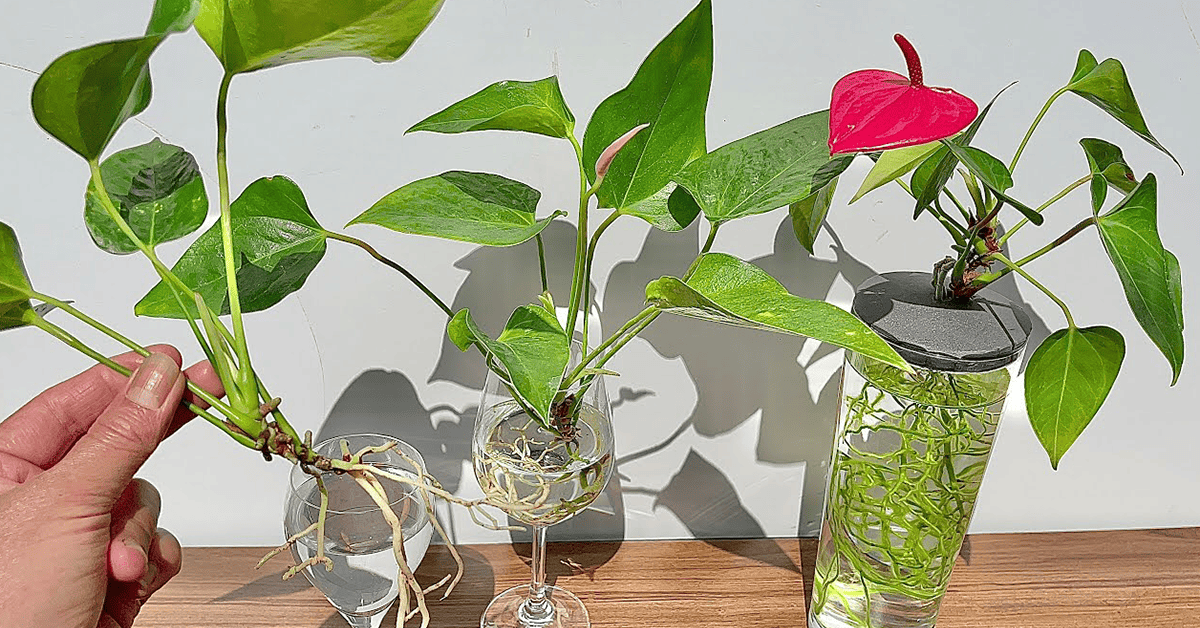
The captivating anthurium, with its vibrant blooms and elegant foliage, is a popular indoor plant. But what if you could multiply your beloved anthurium and create more of these tropical beauties? This article explores propagating anthuriums from stem cuttings, guiding you through both water and soil propagation methods. With a little patience and these simple steps, you’ll be well on your way to an anthurium haven!

Unveiling the Magic: Propagating Anthuriums Through Tissue Culture

Unveiling the Magic - Propagating Anthuriums Through Tissue Culture

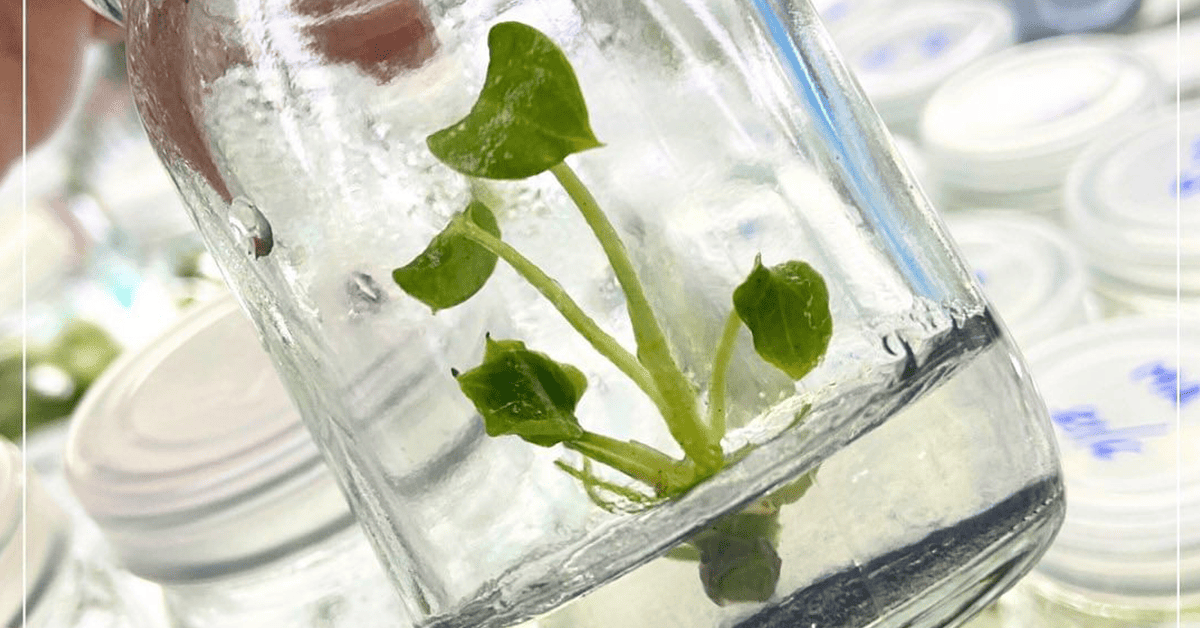
Anthuriums, with their captivating flowers and glossy leaves, are stars of the indoor plant world. But have you ever wondered how nurseries cultivate such an abundance of these tropical beauties? The answer lies in a specialized technique called tissue culture. This article explores the world of tissue culture propagation for anthuriums, guiding you through the process and its advantages.

Propagating Pothos: From Humble Cuttings to Lush Greenery

Propagating Pothos: From Humble Cuttings to Lush Greenery

The pothos (Epipremnum aureum) is a beloved houseplant known for its lush foliage and forgiving nature. But did you know you can easily multiply your existing pothos into a whole new generation of cascading vines? This article explores propagating pothos from stem cuttings, guiding you through both water and soil propagation methods. With a little patience and these simple steps, you’ll be a pothos-propagating pro in no time!

Propagating Corymbia citriodora ‘Scentuous’ Through Grafting

Propagating Corymbia citriodora 'Scentuous' Through Grafting

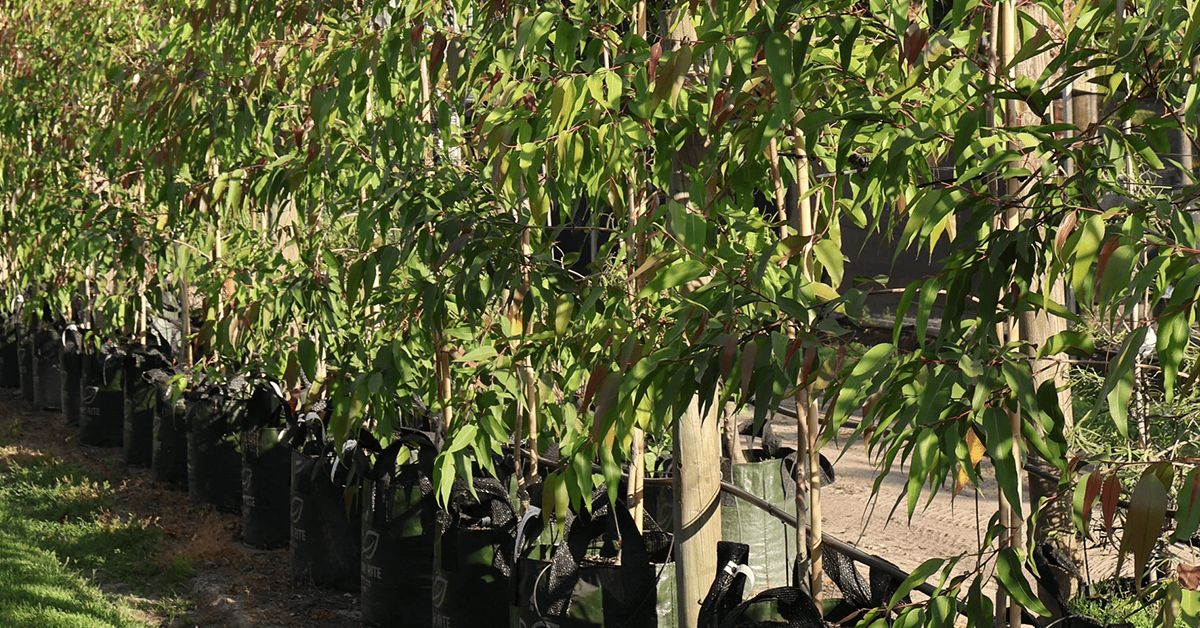
The Corymbia citriodora ‘Scentuous,’ a captivating dwarf version of the lemon-scented gum, is prized for its manageable size and delightful fragrance. However, unlike many plants, ‘Scentuous’ isn’t propagated through stem cuttings or division. This article delves into the fascinating technique of grafting, the secret behind multiplying these lovely trees.

Gibberellic Acid‑Priming Promotes Fluoride Tolerance in a SusceptibleIndica Rice Cultivar by Regulating the Antioxidant and PhytohormoneHomeostasis

Gibberellic Acid‑Priming Promotes Fluoride Tolerance in a SusceptibleIndica Rice Cultivar by Regulating the Antioxidant and PhytohormoneHomeostasis

Excessive utilization of groundwater for anthropogenic purposes has led to severe depletion of the water table, resulting in
contamination of fluorides from the mineral bed. Irrigation of rice seedlings with such fluoride-infested water leads to high
fluoride bioaccumulation and compromised growth physiology. In the present study, we showed that the priming of seeds
with gibberellic acid 3 (GA) alleviated prolonged fluoride-induced toxicity in the fluoride-susceptible indica rice cultivar,
IR-64 (grown in soil) by reducing the accumulation of the xenobiotic within the seedling biomass. The primed seeds showed
improved percentage of germination during fluoride stress compared to the non-primed seeds. The stressed seedlings grown
from the GA-primed seeds exhibited increased endogenous accumulation of GA and the auxin, indole-3-acetic acid which
stimulated shoot and root growth and relative water content, compared to the stressed seedlings germinated from the nonprimed
seeds. GA-priming reduced the chlorophyll degradation, affected the homeostasis of the accessory pigments and
lowered the electrolyte leakage during stress. Upon GA-priming, the fluoride-induced oxidative stress was ameliorated by
an increase in proline, anthocyanin, flavonoid and total phenolic contents, reducing power, total antioxidant capacity and
DPPH-radical scavenging activity. The altered activity of the antioxidative enzymes like catalase, ascorbate peroxidase and
guaiacol peroxidase also enabled efficient H2O2
scavenging in the stressed plants germinated from the primed seeds. Thus,
seed pre-treatment with GA promoted fluoride tolerance by activating the antioxidant machinery and elevating the endogenous
level of the two most important classes of plant growth regulators, gibberellic acid and auxin.