Nigella Damascena: From Tiny Seed to Showy Bloom – A Guide to Seed Sowing

Nigella Damascena: From Tiny Seed to Showy Bloom - A Guide to Seed Sowing

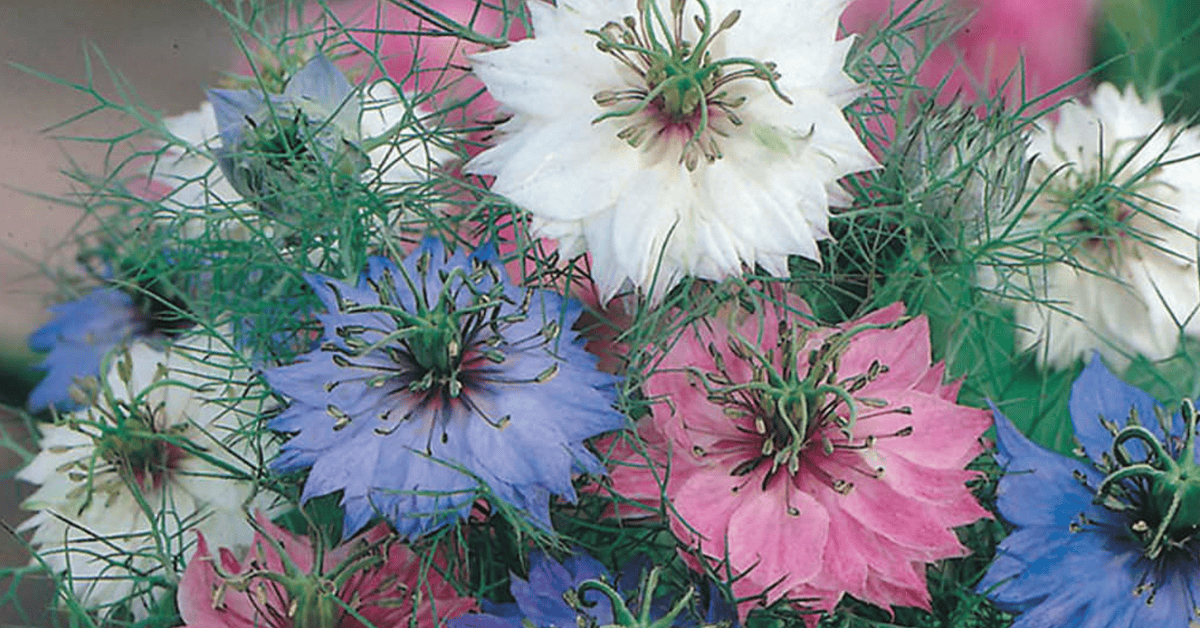
Nigella damascena, often called Love-in-a-Mist for its delicate blooms surrounded by wispy foliage, is a beloved annual flower prized for its unique beauty. But how do you cultivate these charming plants from scratch? This article explores sowing Nigella damascena seeds, guiding you through both direct sowing outdoors and starting seeds indoors for earlier blooms. With a little planning and these simple steps, you’ll be well on your way to a stunning display of Nigella damascena in your garden!

Effective callus induction and plant regeneration in callusand protoplast cultures of Nigella damascena L.

Effective callus induction and plant regeneration in callusand protoplast cultures of Nigella damascena

In this study we report the development of effective in vitro systems for a medicinal plant Nigella damascena L. comprising:
(1) callus induction, (2) somatic embryogenesis in callus cultures with subsequent plant regeneration, and (3) isolation
and regeneration of callus-derived protoplasts. Callus development was achieved on 83–100% of hypocotyl and cotyledon
explants, whereby Murashige and Skoog medium (MS) supplemented with 3 mg L−
1 6-benzylaminopurine and 0.5 mg L−
1
α-naphthaleneacetic acid (NAA; BN medium) was more advantageous than MS with kinetin and NAA (KN medium). Histological
observations of calli revealed the presence of embryogenic zones from which somatic embryos developed on the
hormone-free medium. Plant regeneration was observed on 76–95% of calli. A high capacity to form somatic embryos and
regeneration was maintained in long-lasting cultures, i.e. even in 2 year old callus.
The obtained callus was also a good source tissue for protoplast isolation. By applying a mixture of cellulase and pectolyase,
the acceptable yield of viable protoplasts was achieved, especially from hypocotyl-derived callus maintained on BN medium.
Protoplasts embedded in an alginate matrix and cultured in modified Kao and Michayluk media re-constructed their cell
wall and re-entered mitotic divisions. About 30% of small cell aggregates formed microcalli, which, after the release from
alginate, proliferated continuously on KN and BN media, irrespective of the tissue variant used as the protoplast source.
Somatic embryo formation and plant regeneration were successful on hormone-free media. An effective plant regeneration
system of N. damascena protoplast cultures has been developed and is being reported for the first time

Propagating a Fiddle Leaf Fig: From Branch to Baby!

Propagating a Fiddle Leaf Fig - From Branch to Baby!

Unleash your inner plant propagator and cultivate a profusion of fiddle leaf figs (Ficus lyrata)! This guide unlocks the secrets to multiplying your beloved fiddle leaf fig using stem cuttings. We’ll explore both water and soil propagation methods, along with helpful tips to maximize success. From selecting the perfect stem to fostering an ideal environment for root growth, this article equips you with the knowledge to transform a single fiddle leaf fig into a flourishing indoor jungle. Plus, we’ll delve into a fascinating fun fact to quench your botanical curiosity!

Unveiling the Magic: An In-Depth Exploration of Micropropagation

Unveiling the Magic: An In-Depth Exploration of Micropropagation

Micropropagation, also known as plant tissue culture, is a powerful technique for rapidly multiplying desirable plant varieties. This article delves into the intricate world of micropropagation, exploring its principles, procedures, and extensive applications. We’ll unveil the fascinating journey of transforming tiny plant tissues into a multitude of genetically identical offspring within a controlled laboratory environment.

Adventitious Bud Development and Regeneration in Tillandsia Eizii

Adventitious Bud Development and Regeneration in Tillandsia Eizii

The bromeliad Tillandsia eizii is a striking species with large, colorful, and persistent inflorescences that can reach 1 m in length. The value of this plant as an ornamental and its importance in cultural and religious activities has led to its over-collection in the wild. Clonal propagation via tissue culture may be a means to repopulate native stands while meeting the demands for this species as an ornamental and ceremonial plant. Adventitious bud proliferation was induced from axenically germinated seedling material. Parameters evaluated were the age of explant material at the time of transfer onto bud-induction medium, the concentration of plant growth regulators, and the period of exposure to induction medium. Light and scanning electron microscopy (SEM) established the origin and development of buds. Twelve-week-old seedling explants rapidly initiated adventitious buds after a 30-d induction period on shoot-initiation medium. Adventitious buds were induced in 40% of the explants placed on media with 2 mg l21 6-benzylaminopurine (BA) (8.88 mM) plus 0.1 mg l21
a-naphthaleneacetic acid (NAA) (0.54 mM) with some cultures becoming highly prolific after repeated subculture. Shoots elongated in proliferating cultures, and plants were successfully acclimatized and planted into the greenhouse. The results indicate that tissue culture may be used as a means to propagate this epiphytic bromeliad species, which is being seriously affected by deforestation and habitat destruction. In addition, adventitious bud proliferation can provide a means to propagate superior genotypes.

Tillandsia Stricta: Beyond Seeds – Exploring Propagation Through Offsets

Tillandsia Stricta: Beyond Seeds - Exploring Propagation Through Offsets

Propagating Tillandsia stricta, the popular air plant, isn’t just about aesthetics! It allows you to cultivate more of these unique, low-maintenance plants. While some sources mention stem cuttings, the preferred method is through pups, or offsets. This article explores why pups are the way to go for Tillandsia stricta propagation, guiding you through the separation process and aftercare for your new pup. With a little patience and these steps, you’ll be a pro at multiplying your Tillandsia stricta in no time!

From Branch to Bloom: Propagating Frangipani with Cuttings

From Branch to Bloom: Propagating Frangipani with Cuttings

The frangipani (Plumeria spp.), also known as plumeria, is a beloved flowering tree prized for its intoxicating fragrance and dazzling blooms. But did you know you can propagate your existing frangipani and cultivate more of these tropical beauties? This article explores propagating frangipani from stem cuttings, guiding you through both water and soil propagation methods. With a bit of effort and these simple steps, you’ll be well on your way to a flourishing frangipani haven!

New basal media for half-anther culture of Anthurium andreanum

New basal media for half-anther culture of Anthurium andreanum

Abstract A successful protocol for high frequency callus induction and plant regeneration from Anthurium andrea- num Linden ex Andre´ cv. Tropical half-anthers is descri- bed. Different variables using Winarto and Teixeira and Murashige and Skoog basal media supplemented with several plant growth regulators [2,4-dichlorophenoxy ace- tic acid (0.1–1.0 mg/l), a-naphthalene acetic acid (0.01–0.2 mg/l), thidiazuron (0.5–2.0 mg/l), 6-benzylami- nopurine (0.5–1.0 mg/l), and kinetin (0.5–1.0 mg/l)] were tested for their ability to induce high frequency callusing in half-anthers, indirect regeneration and rooting of shoots. Basal medium, as well as the combination and concentra- tion of hormones applied, had a significant effect on callus formation, shoot regeneration and adventitious root for- mation. Winarto and Teixeira-1, an original basal medium containing 0.01 mg/l a-naphthalene acetic acid, 0.5 mg/l thidiazuron and 1.0 mg/l 6-benzylaminopurine was suit- able for callus formation while an improved basal medium i.e., New Winarto–Teixeira-3 supplemented with 0.25 mg/l 2,4-dichlorophenoxy acetic acid, 0.02 mg/l a-naphthalene acetic acid, 1.5 mg/l thidiazuron and 0.75 mg/l 6-benzyl- aminopurine enhanced callus formation. High shoot regeneration and multiplication was also possible on New Winarto–Teixeira-3. Shoots formed a strong adventitious root system on New Winarto–Teixeira-3 containing. 0.2 mg/l a-naphthalene acetic acid and 1.0 mg/l kinetin. Plantlets that varied in size and performance were suc- cessfully acclimatized and adapted to ex vitro conditions. Cytological analysis of 180 acclimatized-plantlets ex vitro revealed that 34 were haploid (n = 14–18), 15 aneuploid (n = 20–26), 126 diploid (n = 28–34) and 5 triploid (n = 45–57). The potential use of this protocol for devel- oping half-anther culture of other Anthurium species or cultivars is discussed.

Micropropagation of Anthurium – MATSUMOTO 1997

Micropropagation of Anthurium - MATSUMOTO 1997

Within the family Araceae, Anthurium is the largest, most morphologically diverse and complex genus, consisting of approximately 1000 species. Native to Central and South America, members of Anthurium are found at elevations ranging from sea level to 3000 m, most commonly in cloud forests at 1500m (Croat 1986). Plants of this herbaceaous perennial monocot are terrestrial or epiphytic. Typical of the aroids is the spadix, consisting of a multitude of unobtrusive true flowers supported by a fleshy axil. The protogynous nature of the bisexual flowers in Anthurium favors cross-pollination. The commercial flower is a combination of the spadix and a colorful modified leaf, termed spathe. Attractive foliage of some species makes anthuriums also suitable for leaf harvest and cultivation as a potted plant.

Anthurium Adventures: Propagating from Stem Cuttings

Anthurium Adventures - Propagating from Stem Cuttings

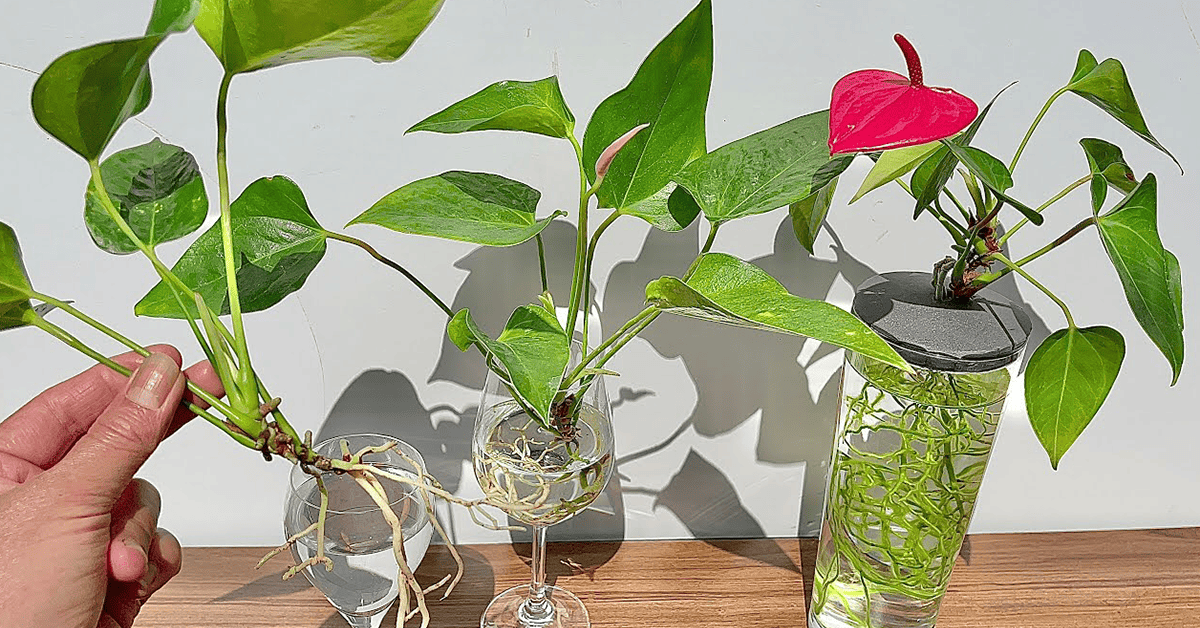
The captivating anthurium, with its vibrant blooms and elegant foliage, is a popular indoor plant. But what if you could multiply your beloved anthurium and create more of these tropical beauties? This article explores propagating anthuriums from stem cuttings, guiding you through both water and soil propagation methods. With a little patience and these simple steps, you’ll be well on your way to an anthurium haven!