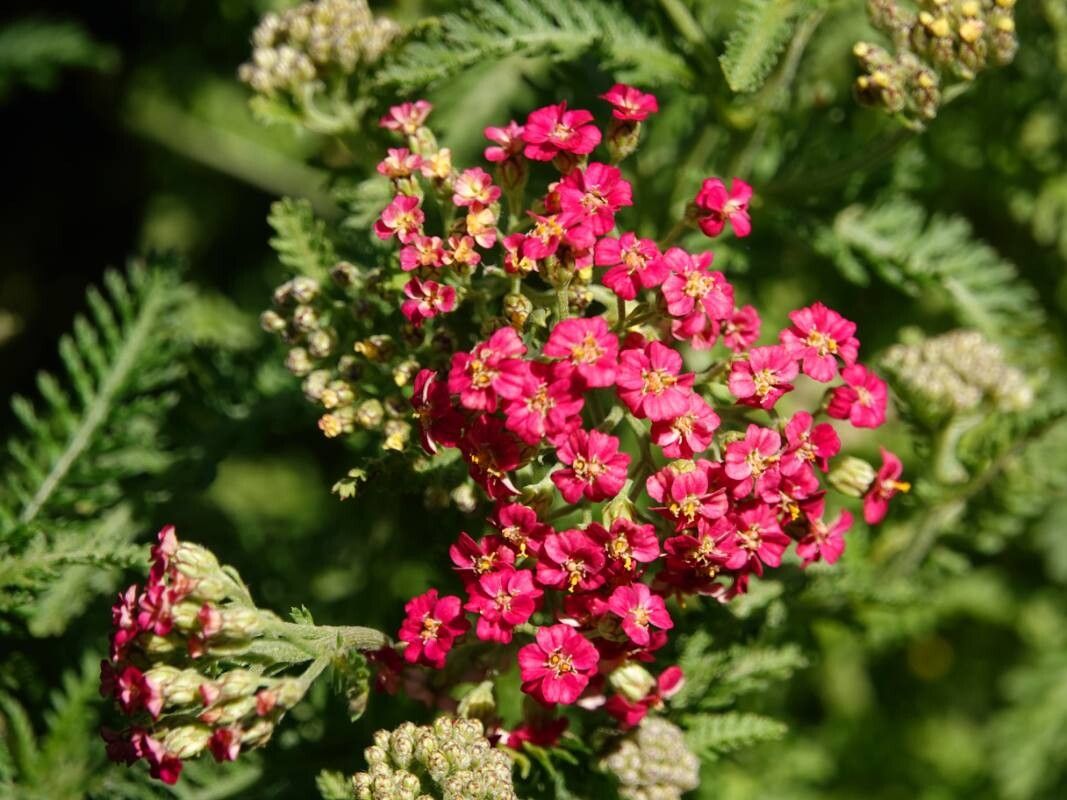
Propagating Achillea distans: A Gardener’s Guide to the Spreading Yarrow
Achillea distans, commonly known as spreading yarrow or fernleaf yarrow, is a captivating perennial prized for its airy, fern-like foliage and delicate, umbel-shaped flower clusters. Its drought tolerance and ability to thrive in full sun make it a popular choice for rock gardens, borders, and xeriscaping projects. Its unique spreading habit, contrasting with the more clump-forming yarrows, presents both opportunities and challenges for propagation.
Seed Germination:
Currently, there are no known reliable methods for seed germination propagation of Achillea distans. While seeds may be produced, their viability is notoriously low, and germination rates are unpredictable even under ideal conditions. Factors such as seed dormancy and the need for specific environmental cues may contribute to the difficulties. This limits the use of seed propagation for this species.
Cuttings:
Cuttings offer a more reliable method for propagating Achillea distans.
Challenges: Rooting can be slow and inconsistent, particularly if proper techniques are not followed. The timing of cuttings (ideally taken in spring or early summer from semi-hardwood growth) is crucial for success.
Tips: Take 4-6 inch cuttings from non-flowering stems. Remove lower leaves to prevent rotting. Dip the cut ends in rooting hormone to encourage root development. Plant cuttings in a well-draining propagation mix kept consistently moist but not waterlogged. A humid environment (using a humidity dome or propagator) will enhance rooting success. Place cuttings in bright, indirect light.
Rewards: Cuttings offer a relatively quick method of producing genetically identical plants to the parent plant, preserving desirable traits. It allows for efficient propagation of a limited number of selected plants.
Division:
Division is arguably the easiest and most successful method for propagating Achillea distans.
Challenges: Division is best accomplished during spring or fall when the plant is actively growing or beginning to go dormant. It requires slightly more physical effort compared to cuttings or seed propagation. Improper division can damage the plant, leading to its decline.
Tips: Carefully dig up the established plant, ideally when it’s 2-3 years old. Gently separate the crown into smaller divisions, ensuring each division has healthy roots and numerous shoots. Replant the divisions in well-draining soil, spacing them according to the mature size of the plant. Water thoroughly after planting.
Rewards: Division is a straightforward process with a high success rate, leading to quick multiplication of existing plants. It’s a reliable method for maintaining the characteristics of the mother plant.
Tissue Culture:
Tissue culture offers the potential for large-scale propagation of Achillea distans.
Challenges: This is a highly specialized technique requiring sterile laboratory conditions, specific media formulations, and specialized equipment. It is not a method easily undertaken by home gardeners.
Tips: While not feasible for home gardeners, tissue culture laboratories can effectively multiply Achillea distans using shoot tip or nodal explants. This method allows for rapid multiplication of disease-free plants and the preservation of rare or valuable cultivars.
Rewards: Mass propagation of identical plants, elimination of diseases, and the potential preservation of genetic diversity are all benefits of tissue culture, although it’s only practical on an industrial or commercial scale.
Conclusion:
Propagating Achillea distans, while presenting some challenges, is achievable through various methods. While seed germination is unreliable, cuttings and especially division offer practical and successful approaches for home gardeners. Tissue culture presents a highly efficient but specialized option for large-scale propagation. The satisfaction derived from successfully propagating this charming plant, especially overcoming the hurdles associated with less reliable methods, significantly enhances the gardening experience. So, choose the method that best suits your skills and resources, and enjoy the rewarding journey of cultivating these beautiful plants. Remember patience and attention to detail are key to success regardless of the chosen method.