Unveiling the Magic: An In-Depth Exploration of Micropropagation

Unveiling the Magic: An In-Depth Exploration of Micropropagation

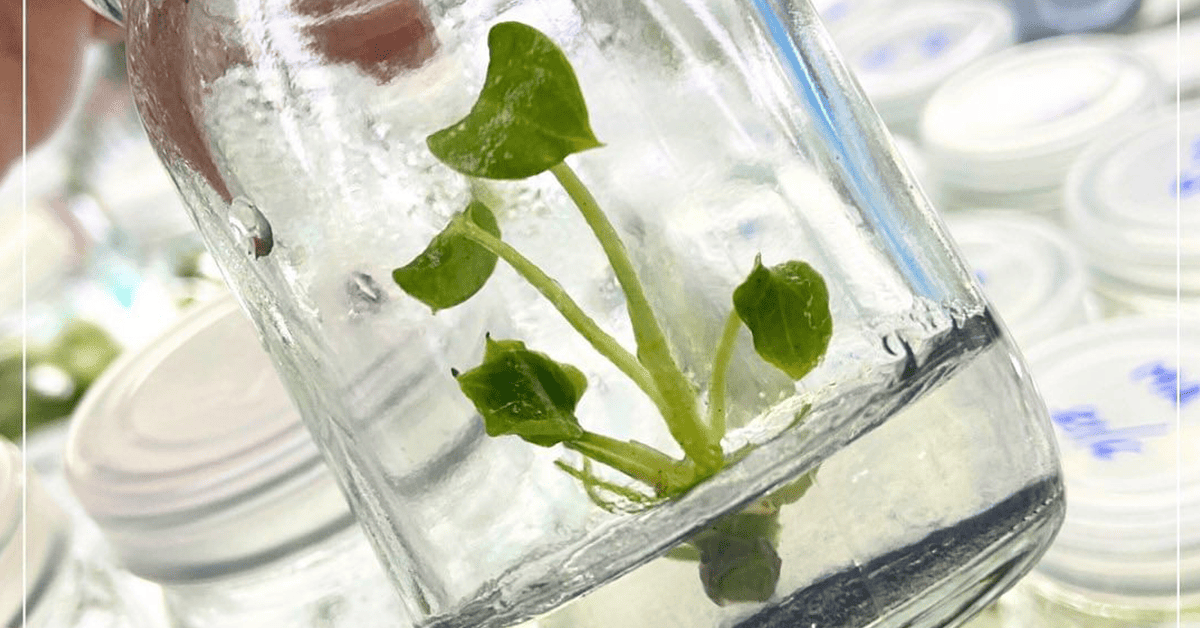
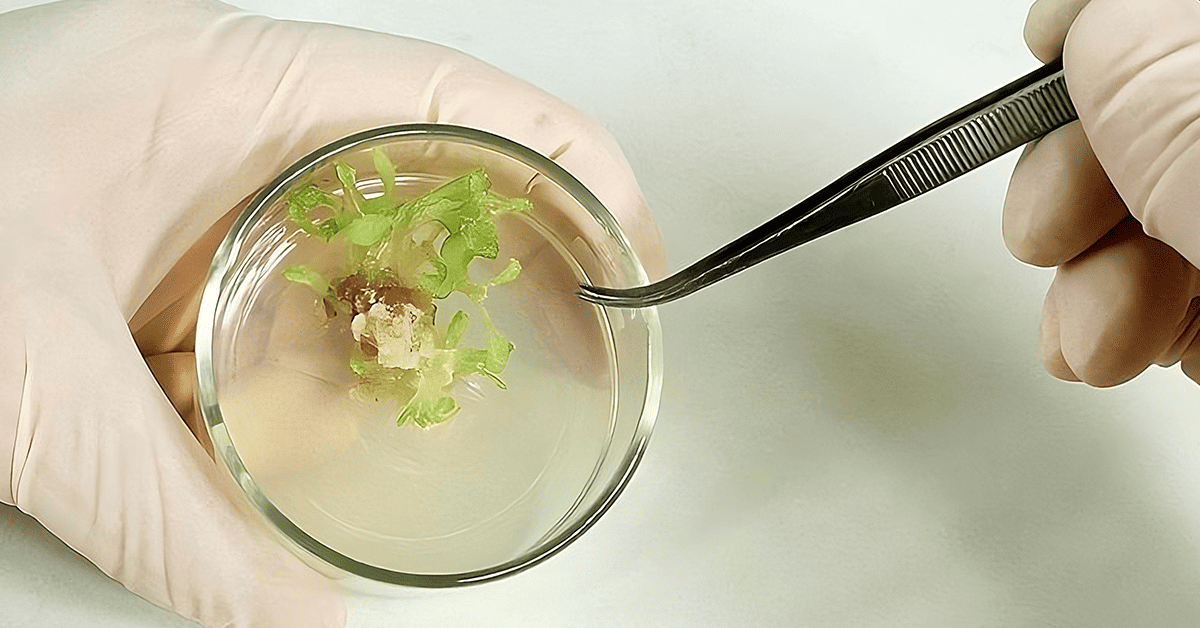
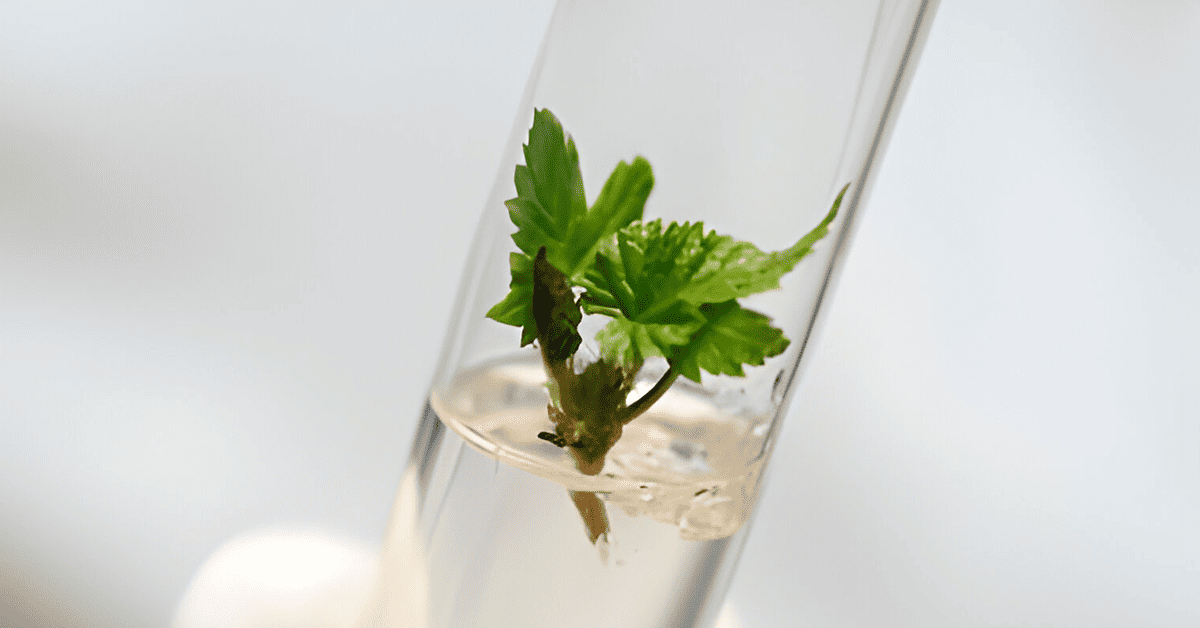
Micropropagation, also known as plant tissue culture, is a powerful technique for rapidly multiplying desirable plant varieties. This article delves into the intricate world of micropropagation, exploring its principles, procedures, and extensive applications. We’ll unveil the fascinating journey of transforming tiny plant tissues into a multitude of genetically identical offspring within a controlled laboratory environment.

Adventitious Bud Development and Regeneration in Tillandsia Eizii

Adventitious Bud Development and Regeneration in Tillandsia Eizii

The bromeliad Tillandsia eizii is a striking species with large, colorful, and persistent inflorescences that can reach 1 m in length. The value of this plant as an ornamental and its importance in cultural and religious activities has led to its over-collection in the wild. Clonal propagation via tissue culture may be a means to repopulate native stands while meeting the demands for this species as an ornamental and ceremonial plant. Adventitious bud proliferation was induced from axenically germinated seedling material. Parameters evaluated were the age of explant material at the time of transfer onto bud-induction medium, the concentration of plant growth regulators, and the period of exposure to induction medium. Light and scanning electron microscopy (SEM) established the origin and development of buds. Twelve-week-old seedling explants rapidly initiated adventitious buds after a 30-d induction period on shoot-initiation medium. Adventitious buds were induced in 40% of the explants placed on media with 2 mg l21 6-benzylaminopurine (BA) (8.88 mM) plus 0.1 mg l21
a-naphthaleneacetic acid (NAA) (0.54 mM) with some cultures becoming highly prolific after repeated subculture. Shoots elongated in proliferating cultures, and plants were successfully acclimatized and planted into the greenhouse. The results indicate that tissue culture may be used as a means to propagate this epiphytic bromeliad species, which is being seriously affected by deforestation and habitat destruction. In addition, adventitious bud proliferation can provide a means to propagate superior genotypes.

New basal media for half-anther culture of Anthurium andreanum

New basal media for half-anther culture of Anthurium andreanum

Abstract A successful protocol for high frequency callus induction and plant regeneration from Anthurium andrea- num Linden ex Andre´ cv. Tropical half-anthers is descri- bed. Different variables using Winarto and Teixeira and Murashige and Skoog basal media supplemented with several plant growth regulators [2,4-dichlorophenoxy ace- tic acid (0.1–1.0 mg/l), a-naphthalene acetic acid (0.01–0.2 mg/l), thidiazuron (0.5–2.0 mg/l), 6-benzylami- nopurine (0.5–1.0 mg/l), and kinetin (0.5–1.0 mg/l)] were tested for their ability to induce high frequency callusing in half-anthers, indirect regeneration and rooting of shoots. Basal medium, as well as the combination and concentra- tion of hormones applied, had a significant effect on callus formation, shoot regeneration and adventitious root for- mation. Winarto and Teixeira-1, an original basal medium containing 0.01 mg/l a-naphthalene acetic acid, 0.5 mg/l thidiazuron and 1.0 mg/l 6-benzylaminopurine was suit- able for callus formation while an improved basal medium i.e., New Winarto–Teixeira-3 supplemented with 0.25 mg/l 2,4-dichlorophenoxy acetic acid, 0.02 mg/l a-naphthalene acetic acid, 1.5 mg/l thidiazuron and 0.75 mg/l 6-benzyl- aminopurine enhanced callus formation. High shoot regeneration and multiplication was also possible on New Winarto–Teixeira-3. Shoots formed a strong adventitious root system on New Winarto–Teixeira-3 containing. 0.2 mg/l a-naphthalene acetic acid and 1.0 mg/l kinetin. Plantlets that varied in size and performance were suc- cessfully acclimatized and adapted to ex vitro conditions. Cytological analysis of 180 acclimatized-plantlets ex vitro revealed that 34 were haploid (n = 14–18), 15 aneuploid (n = 20–26), 126 diploid (n = 28–34) and 5 triploid (n = 45–57). The potential use of this protocol for devel- oping half-anther culture of other Anthurium species or cultivars is discussed.

Micropropagation of Anthurium – MATSUMOTO 1997

Micropropagation of Anthurium - MATSUMOTO 1997

Within the family Araceae, Anthurium is the largest, most morphologically diverse and complex genus, consisting of approximately 1000 species. Native to Central and South America, members of Anthurium are found at elevations ranging from sea level to 3000 m, most commonly in cloud forests at 1500m (Croat 1986). Plants of this herbaceaous perennial monocot are terrestrial or epiphytic. Typical of the aroids is the spadix, consisting of a multitude of unobtrusive true flowers supported by a fleshy axil. The protogynous nature of the bisexual flowers in Anthurium favors cross-pollination. The commercial flower is a combination of the spadix and a colorful modified leaf, termed spathe. Attractive foliage of some species makes anthuriums also suitable for leaf harvest and cultivation as a potted plant.

Unveiling the Magic: Propagating Anthuriums Through Tissue Culture

Unveiling the Magic - Propagating Anthuriums Through Tissue Culture

Anthuriums, with their captivating flowers and glossy leaves, are stars of the indoor plant world. But have you ever wondered how nurseries cultivate such an abundance of these tropical beauties? The answer lies in a specialized technique called tissue culture. This article explores the world of tissue culture propagation for anthuriums, guiding you through the process and its advantages.

Linsmaier and Skoog (LS) Media

Linsmaier and Skoog (LS) Media - Tobacco Tissue Culture

Linsmaier and Skoog (LS) Media is a versatile plant growth medium known for its effectiveness in various plant tissue culture applications, including micropropagation, organ culture, and callus culture. It provides an optimized nutrient profile, particularly beneficial for tobacco cultures.

Plant Tissue Culture : A Promising Tool Of Quality Material Production With Special Reference To Micropropagation Of Banana

In the very fast developing scenario of biological science, the plant tissue culture has taken lead as the most
promising areas of application of biotechnological tools for today and tomorrow agriculture. The areas ranges from
micropropagation of horticultural crops, ornamental and forest trees etc., production of pharmaceutically important compounds,
and plant breeding for improved nutritional value of staple crop plants, including trees for cryopreservation of valuable germplasm.
The rapid production of high quality, disease free and uniform planting stock is only possible through micropropagation. Plant
production can be carried out throughout the year irrespective of season and weather. However micropropagation technology is
expensive as compared to conventional methods of propagation by means of seed, cuttings and grafting etc. Therefore, it is
essential to adopt measures to reduce cost of production. Low cost production of plants requires cost effective practices and
optimal use of equipment to reduce the unit cost of plant production. It can be achieved by improving the process efficiency and
better utilization of resources. Use of ‘Bioreactor’ in plant propagation can increase the speed of multiplication and growth of
cultures and reduce space, energy and labor requirements. The cost of production may also be reduced by selecting several
plants that provide the option for around the year production and allow cost flow and optimal use of equipment and resources.
Quality control is also very essential to assure high quality plant production and to obtain confidence of the consumers. The
selection of explant source, diseases free material, authenticity of variety and elimination of somaclonal variants are some of the
most critical parameters for ensuring the quality of the planting materials. The in vitro culture has a unique role in sustainable
and competitive agriculture, forestry and pharmaceutical industry and has been successfully applied in plant breeding for rapid
introduction of improved plants. Plant tissue culture has become an integral part of plant breeding. At present plant cell culture
has made great advances. Possibly the most significant role that plant cell culture has to play in the future will be in its
association with transgenic plants. The ability to accelerate the conventional multiplication rate can be of great benefit to many
crops/countries where a disease or some climatic disaster wipes out crops. The loss of genetic resources is a common story
when germplasm is held in field gene banks. In vitro storage using plant tissue culture tools and cryopreservation are being
proposed as solutions to the problems inherent in field gene banks. By these means the future generations will be able to have
access to genetic resources for simple conventional breeding programmes, or for the more complex genetic transformation
work. As such, plant tissue culture has a great role to play in agricultural development and productivity. In this review,
important steps of plant tissue culture, its critical precautionary points and commercial applications have been discussed.
As Banana is an important food crop and the second most important fruit crop after mango, a special account has been taken into
consideration to also put on record the steps involved in successful micropropagation of it. Despite the significant commercial
value of the banana crop, the main production constraint is the availability of reliable and safe planting material. The planting
materials obtained through conventional methods (suckers) do not meet the increasing demand for planting and they are of poor
quality. Tissue culture is the approach which can solve these problems. Micropropagation of the planting material is also facing
the different challenges which need to be addressed in order to improve its quality production. Some of the problems which
impair the success of the crop include oxidative browning of the wounded tissues and low number of shoots produce per explant.
This review includes the micropropagation studies of commercially important cultivars of banana in the country, highlights the
challenges encountered in its tissue culture and explores the possibilities of optimization of the in vitro propagation techniques
by using explants from shoot tip.

Banana Plantlet Production Through Tissue Cutlure

BANANA PLANTLET PRODUCTION THROUGHTISSUE CULTURE

In vitro multiplication of banana (Musa spp.) cv. Basrai was studied. Shoot tips were cultured on Murashige & Skoog basal medium supplemented with 5.0 mg/l BAP. Observations were recorded at an interval of four weeks for five subculturings. Evaluations were done at each subculture by counting the number of new shoots produced. Shoot tips coming from different rhizomes behaved differently under in vitro conditions. Some being highly productive while others produced less number of shoots. On the average, 124 plants were produced from each shoot tip after five subculturing.